

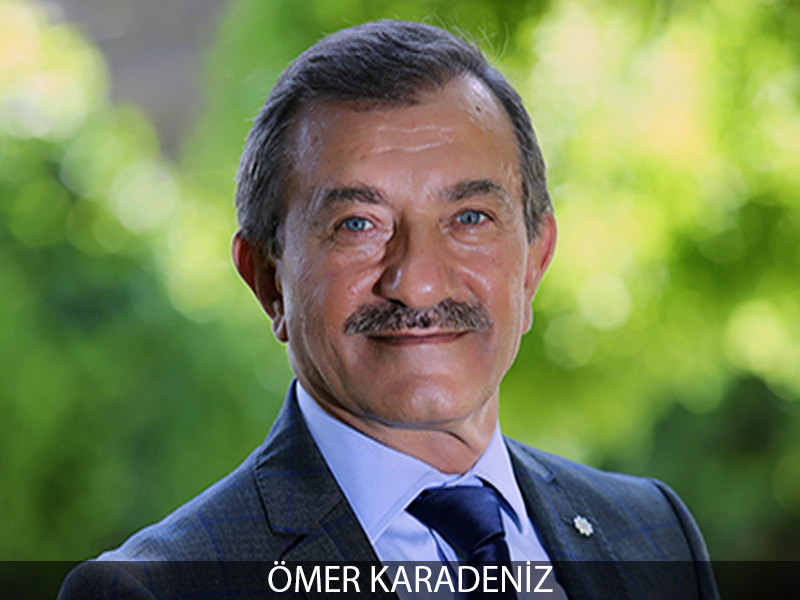
Assessing the Turkish economy's 2.3% growth in the second quarter of 2026, PLASFED Chairman Ömer Karadeniz noted that the industrial sector's 2.4% growth in the second quarter—following a 0.8% contraction in the first—was a positive development. Karadeniz emphasized that achieving sustained and robust industrial growth requires improving financing conditions, reducing production costs, and supporting exports.
According to data released by the Turkish Statistical Institute (TurkStat), the Turkish economy grew by 2.3% in the second quarter of 2026 compared to the same period of the previous year. Seasonally and calendar-adjusted GDP increased by 1.1% compared to the previous quarter. Within the scope of economic activities, the industrial sector recorded 2.4% growth; the sector's return to growth—after contracting by 0.8% in the first quarter—was a notable highlight.
Evaluating the growth figures, Ömer Karadeniz, Chairman of the Plastics Industrialists Federation (PLASFED), stated that the industrial sector regaining growth momentum is significant for the production strength of the Turkish economy.
Karadeniz said, “The industrial sector's 2.4% growth in the second quarter, following a 0.8% contraction in the first, is promising as it indicates a renewed upturn on the production front. However, for Türkiye to enter a path of sustainable and high-quality growth, this industrial recovery needs to become permanent.”
“Industrial growth alone is not enough”
Pointing out that sustainable growth in the Turkish economy is only possible by strengthening production and industry, Karadeniz emphasized that the quality of growth is just as important as the growth rate itself.
Karadeniz stated, “Industrial growth of 2.4 percent is a significant and valuable development. However, the high financing costs, energy and raw material expenses, labor costs, and global competitive pressures that our industrialists face today persist. To make the growth achieved under these conditions permanent, we need to strengthen policies that reduce production costs and support investments.”
“The plastics sector is a cornerstone of industrial production”
Noting that the plastics sector supplies inputs to a vast production chain—ranging from automotive and packaging to construction and healthcare—Karadeniz highlighted the sector's strategic importance for Türkiye's industrial and export capacity. He pointed out that plastics are now used in almost every sector and represent a key area of production in terms of technology and innovation.
Karadeniz said, “The plastics industry is one of the fundamental sectors of Türkiye's production ecosystem. Therefore, we want the industrial recovery to be strongly reflected in the plastics sector as well. To achieve this, we must resolve the issues regarding raw materials—where our sector is heavily dependent on imports—as well as financing and energy costs. We need to transition to a more competitive structure with higher value-added output while maintaining our production capacity.”