

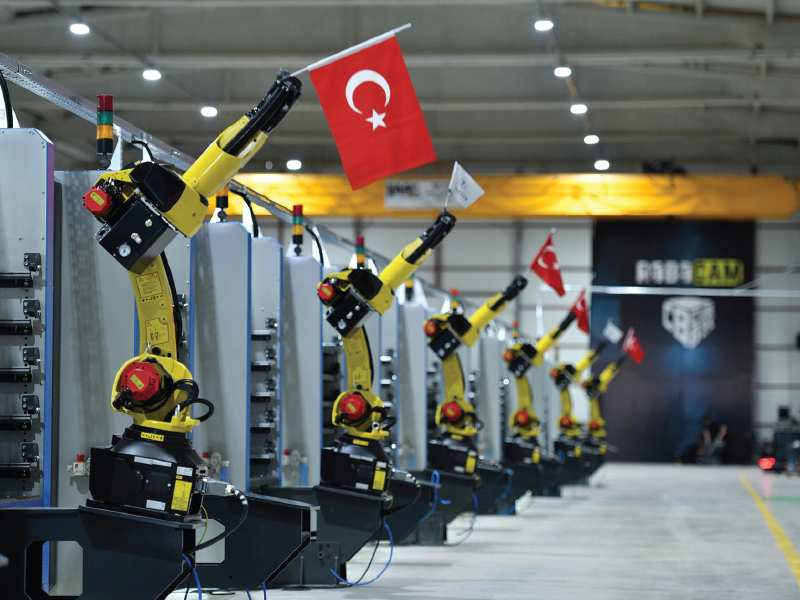
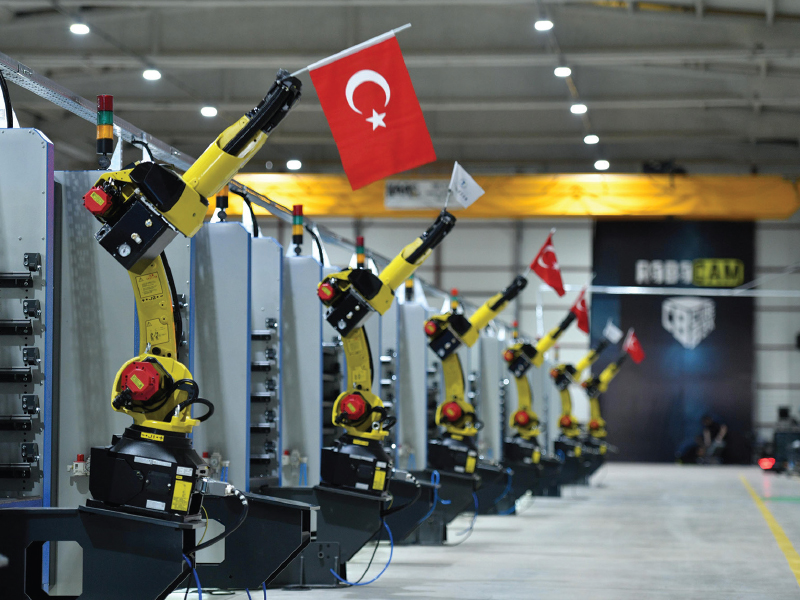
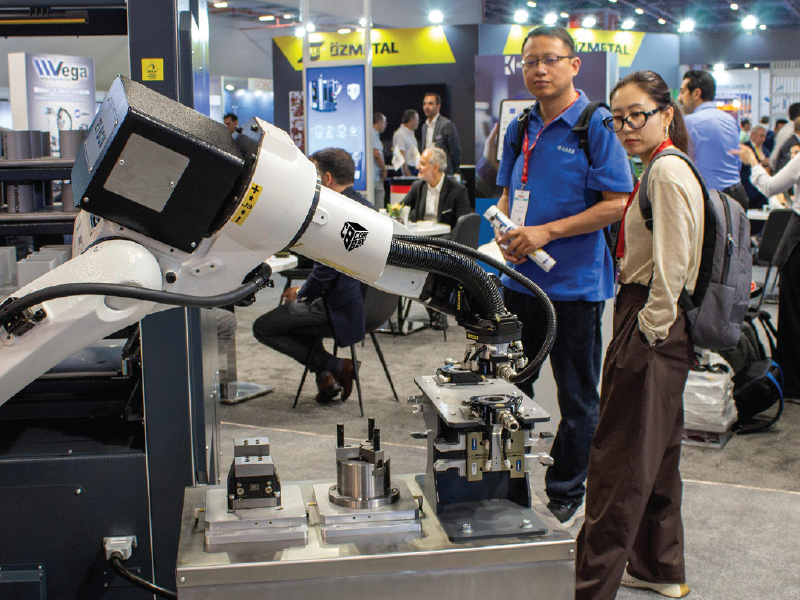
Despite the contraction experienced in the machine tool sector over the past two years, signs of a renewed rise in orders are emerging. While the automotive supply industry’s share of the sector has dropped from 50% to 35%, the share held by the defense and aviation sectors remains above 50%. This transformation in production is accelerating industrial investments in automation, with companies increasingly turning to systems that enable more efficient production with fewer operators. Playing a pioneering role in areas ranging from industrialization to digitalization in Turkey, Tezmaksan is shaping the sector’s transformation through its automation systems, MES infrastructures, and next-generation solutions offered via a leasing model.
The global economic contraction and rising production costs are directly impacting the machine tool sector. In a sector that hit a historic peak of $2 billion in 2021, figures for 2025 showed production falling by 8% to $780 million, exports dropping by 3% to $670 million, and imports declining by 7% to $1.5 billion; meanwhile, machine tool consumption fell by 10% to $1.6 billion. Tezmaksan Group CEO Hakan Aydoğdu stated that they expect the sector to enter a recovery phase starting in the second half of 2026, noting that demand from the defense and aviation sectors, in particular, has boosted activity on the production side and that automation systems—which deliver higher efficiency with lower investment—are now coming to the forefront of the industry.
“The combined share of the defense and aviation sectors
exceeds 50 percent”
Highlighting that the shift in production is a permanent transformation rather than a temporary one, Aydoğdu said, “Demands from the defense and aviation sectors, in particular, are altering the balance within the machine tool industry. The automotive supply industry, which had long been the sector’s largest customer, previously accounted for approximately 50 percent of total production.

With the recent slowdown in the automotive sector, this figure has dropped to around 35 percent. The contraction in the European automotive industry and the slowdown in production have directly impacted the supply industry in Turkey. However, the defense and aviation sectors have stepped in to fill this gap. Today, the combined share of these two sectors has risen above 50 percent. While geopolitical developments create uncertainty on a global scale, they are also generating a new wave of demand in strategic sectors such as defense and aviation.”
“A recovery in orders has begun”
Noting that a contraction of approximately 10 percent was observed in sector data during the early months of 2026, Aydoğdu stated, “Despite this, we are observing a resurgence in production activity and an increase in orders across the sector. There is a lag of about 5 to 6 months between receiving an order and invoicing. Therefore, we anticipate seeing the effects of this recovery more clearly in the second half of the year, particularly after September. Following the sharp decline in 2023, we foresee that the downward trend has ended and a gradual recovery is set to begin.”
“Shortage of operators in the industry has made automation essential”
Noting that the shortage of operators on the production floor has become a global problem, Aydoğdu said, “Companies have turned toward production models capable of delivering higher efficiency with fewer operators. Today, finding operators for the production floor is becoming increasingly difficult—not only in Turkey but in many countries around the world. Consequently, rather than simply investing in more machinery, manufacturers are shifting toward automation systems that allow them to utilize existing capacity more efficiently. Thanks to automation investments, Turkey is able to achieve comparable production levels with lower investment costs. Accessible automation solutions will become increasingly critical in the near future for SMEs, which are experiencing a significant turning point in their digitalization journeys. Although 80 percent of SMEs in Turkey express a desire to digitalize, only 17 percent are able to take

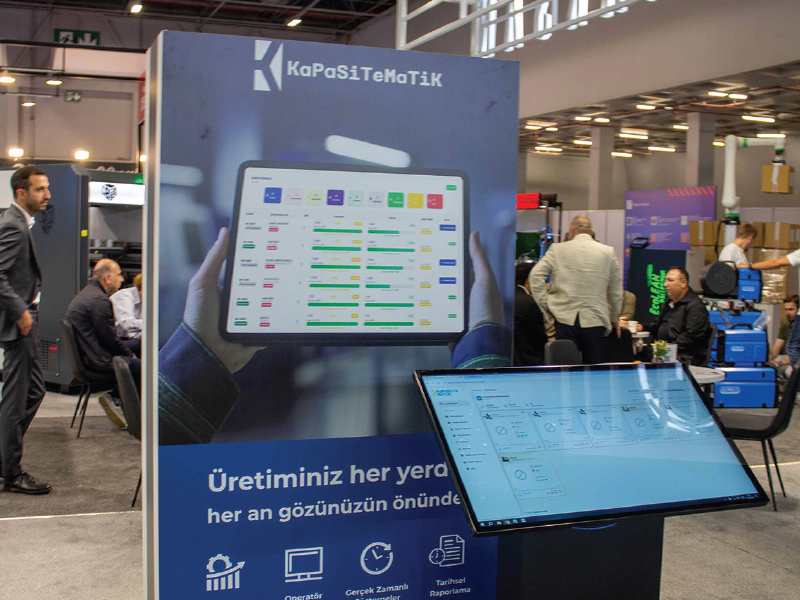
concrete steps toward doing so. Digitalization has now become a prerequisite for competitiveness. It is impossible to boost efficiency within a production structure that does not generate data or allow for measurement; therefore, end-to-end traceability of production is essential. At this juncture, MES infrastructures play a critical role in real-time production monitoring and efficiency management.”
“We will offer Kapasitematik 2.0 via a rental model”
Providing information on the production monitoring and automation solutions developed by Tezmaksan, Aydoğdu said, “We are working on new models to reduce investment costs. Development of our 5G and AI-powered Kapasitematik 2.0 software is ongoing. We aim to offer this product through a rental model rather than a direct sales model. This will allow companies to access digital manufacturing infrastructure without bearing high investment costs. We also plan to establish a sustainable revenue model.”
“Turkey continues to be a fast, flexible, and reliable manufacturing hub”
Stating that Turkey maintains its strategic position in global supply chains thanks to its manufacturing prowess and geographical advantages, Tezmaksan Group CEO Hakan Aydoğdu said: “With the strengthening of the nearshoring trend, Turkey continues to serve as a fast, flexible, and reliable manufacturing hub for neighboring countries, particularly in Europe. Turkey stands as an indispensable manufacturing base for a wide range of markets, extending from China to the Gulf states.”
“We have increased production by 20 percent at our Sivas factory”
Touching upon Tezmaksan’s growth plans, Aydoğdu added: “We decided to relocate our Istanbul production facility to Sivas. We have increased production at our Sivas factory by 20 percent and are expanding our export share. Today, we export to 40 countries. We generate 50 percent of our Robotics Technologies company’s revenue from foreign markets. The US, Europe, and the UK are among our established, strong markets, while Scandinavian countries, South America, and the Far East are among our new target markets.”
