

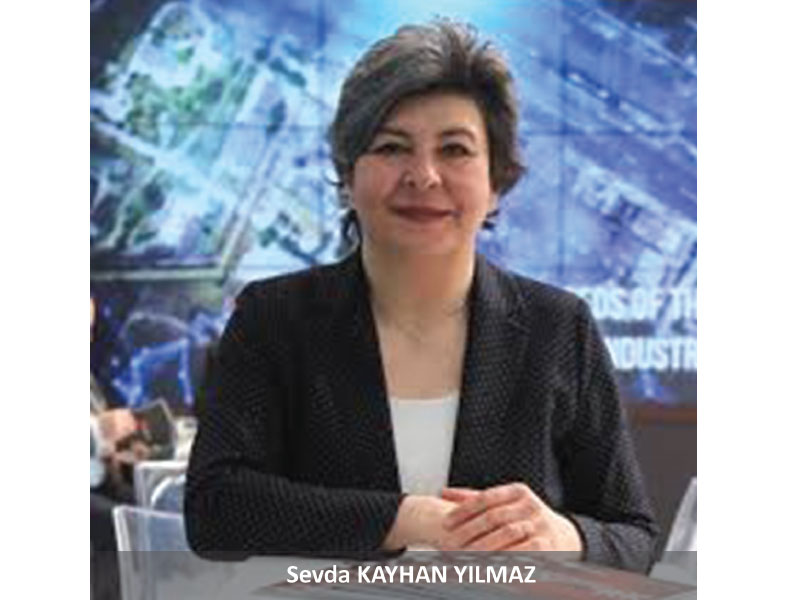

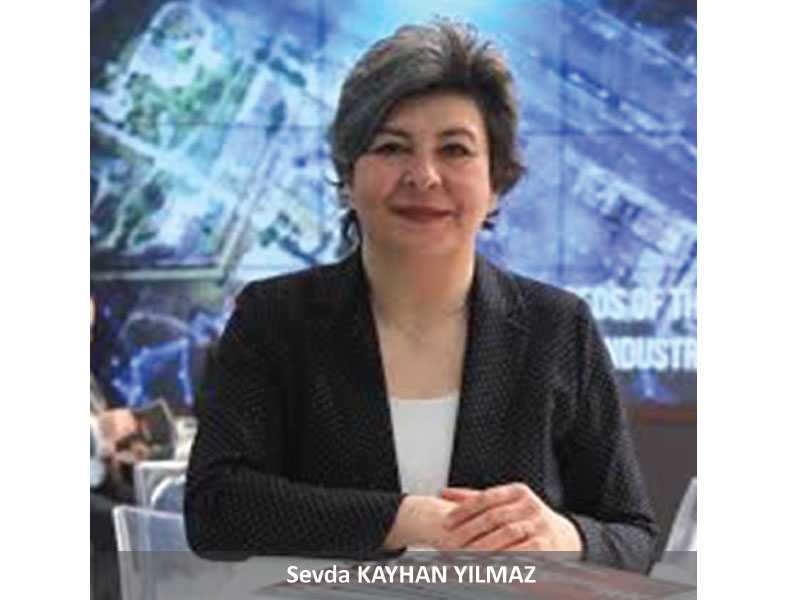
According to consolidated data on the machinery manufacturing industry shared by the Machinery Exporters Association (MAİB), Turkey’s total machinery exports, including those from free zones, reached $9.3 billion in the first four months of the year. Stating that they support the recent steps taken by the government to protect the global competitiveness of manufacturers and alleviate burdens on manufacturing sectors, Sevda Kayhan Yılmaz, President of the Machinery Exporters Association, said, “To protect the domestic supply chain and finance the transformation processes of companies in the global market, it is necessary to eliminate technical bottlenecks in financial markets and to selectively direct resources to strategic sectors that develop technology.”
According to consolidated data on the machinery manufacturing industry; total machinery exports, including those from free zones, increased by 4.5% compared to the same period last year, reaching $9.3 billion in the first four months of the year. Although the quantity of machinery exported decreased by 6.7%, the average export price per kg increased by 12% to $8.6, resulting in an additional $350 million in exports during this period. Annualized consolidated machinery exports increased by 1.3% to $29.1 billion, while machinery imports rose by 8.2% compared to the previous 12 months, reaching $47.2 billion. During this period, sales to Germany, Turkey’s leading machinery export market, increased by 14.1% to $1.1 billion, while exports to the USA, which saw a 39.5% increase, reached $767 million. Italy maintained its third-place position with a 12.7% increase in machinery exports to $442 million, while Iraq, Russia, and Poland were the largest markets experiencing contraction. Internal combustion engines and components, the most exported sector, saw a 6.4% increase to $867 million, followed by construction and mining machinery at $629 million and pumps and compressors at $530 million. Turbines, turbojets, and hydraulic cylinders showed the highest percentage increase at 40.1%, while leather processing machinery experienced the largest decrease at 52.2%.

“We are in a complex labyrinth where every step clashes with the interests of another actor.”
Noting that as countries’ security concerns and geopolitical power struggles intensify, conflicts of interest continue to erect new customs and technology barriers, Sevda Kayhan Yılmaz, President of the Machinery Exporters Association, assessed the global economic conjuncture as follows:
“Europe, which has long been burdened with additional costs in energy supply due to the Ukraine-Russia War, is already facing an additional €25 billion in energy costs due to the blockage of global energy lines in the Strait of Hormuz. Amidst this energy turbulence, where infrastructure investments to provide a solution will take many years, Germany is trying to transform its budget into a military modernization drive by allocating 3.1% of its national income to defense spending. In this scenario where the focus of investments is shifting, our machinery industry’s existing high-tech production lines need to undergo an integration process that is fully compliant with the special regulations and certification requirements of the defense industry. However, this transformation requires navigating a complex labyrinth where every step clashes with the interests of another actor, under the shadow of the technology wars that have recently escalated again between the US and China and are destabilizing global supply chains.”
In this process, where countries are trying to find their way through new collaborations and multiple alliances amidst conflicting interests, Yılmaz stated that Turkey is adopting a proactive approach by engaging in dialogue with all its commercial partners:
“We manage this strategic search for direction by being present in the field at every point where the heart of global industry beats. In our intensive trade fair and delegation marathon spanning a wide geography across different continents, we strive to solidify the identity of Turkish machinery as a reliable and flexible solution partner. In this equation, where we adapt to the West’s new generation protectionist walls focused on cybersecurity and low carbon emissions, while competing with the East’s technological raw material and production advantages, we want to maintain our position as a trusted partner everywhere in the world.”
“We support steps that alleviate the burdens on manufacturing sectors”
Expressing satisfaction that these initiatives, aimed at gaining a competitive edge in global markets, are supported by structural steps that will expand the financial maneuvering space of firms, Yılmaz made the following assessments:
“We support the corporate tax reduction, which came to the fore with the Investment Incentive Package, as a strategic step to alleviate the burdens on manufacturing sectors. This regulation is important both for protecting the domestic supply chain and for financing the transformation processes of our firms in the global market. Eliminating technical bottlenecks in financial markets will greatly contribute to this step becoming a lasting effect. The narrowing credit supply due to restrictions on foreign currency loan usage and high commission costs increase financial risks by depriving exporters of their most basic defense mechanism: natural hedging. The fact that exceptions for Turkish Lira loans are limited to the scope of the Investment Incentive Scheme for foreign currency loans also makes access to international funds and foreign currency resources more difficult. We believe that financial instruments will be structured as a whole, from tax reductions to the credit market, and that the financing channels needed by industrialists will be kept more open when developments in the Middle East conclude.”
“Resources should be selectively directed to strategic sectors”
Yılmaz, noting that financial analyses that consider current capacity increases and technological renewal investments in industry as a waste of resources overlook the other side of the coin, concluded his remarks as follows:
“The industrialist’s main priority is not profit maximization, but achieving a sustainable investment foundation that will allow them to compete technologically with their rivals. The low capacity utilization rates in production facilities should be seen as related to the increasing macroeconomic inconsistencies worldwide. On the domestic side, a long period was experienced where industrial revenues lagged behind costs due to the exchange rate remaining below inflation. This inconsistency, which put exporters at a disadvantage in foreign competition and which we believe has now come to an end, made imports attractive, putting domestic producers at risk of losing their position as the main supplier in the domestic market. In short, the reason why investments have not yet reached the expected efficiency should be sought in the global instability and temporary erosion in competitiveness, exacerbated by political and geopolitical uncertainties. Addressing technical bottlenecks in financial markets and selectively directing resources to strategic sectors that develop technology is crucial for Turkey.” This will rapidly revitalize the economy. Transforming the existing capacity and potential in industry into high productivity through a holistic strategy will again be our strongest weapon in the fight against current account deficit and inflation.”
