

170 Tons of Molten Slag: How do steel mills worldwide manage these challenging transport operations?
Transporting molten slag in steel mills is one of the most challenging tasks in industrial vehicle engineering. High temperatures, difficult terrain, and tons of weight place immense pressure on vehicle technology and drivers.
Being around the melting furnace, which has a variable scorching temperature of 100 to 150°C, is only possible with protective equipment. The hot liquid slag produced during the melting process must be transported safely and quickly from the firing area to the casting area multiple times a day.
This load, reaching extreme temperatures of 1500 degrees, demands precision, speed, and uninterrupted reliability. The driver must navigate the massive vehicle carrying 110 tons of molten slag through confined spaces, uneven terrain, and extreme heat conditions within the facility, maintaining a highly focused approach. A single mistake or delay can cause the slag to cool in the crucible, damage equipment, and halt production. Therefore, slag transportation at steel plants worldwide represents one of the most challenging tasks, both technologically and operationally, due to the high temperatures, tons of cargo, and the need for 24/7 continuous operation.

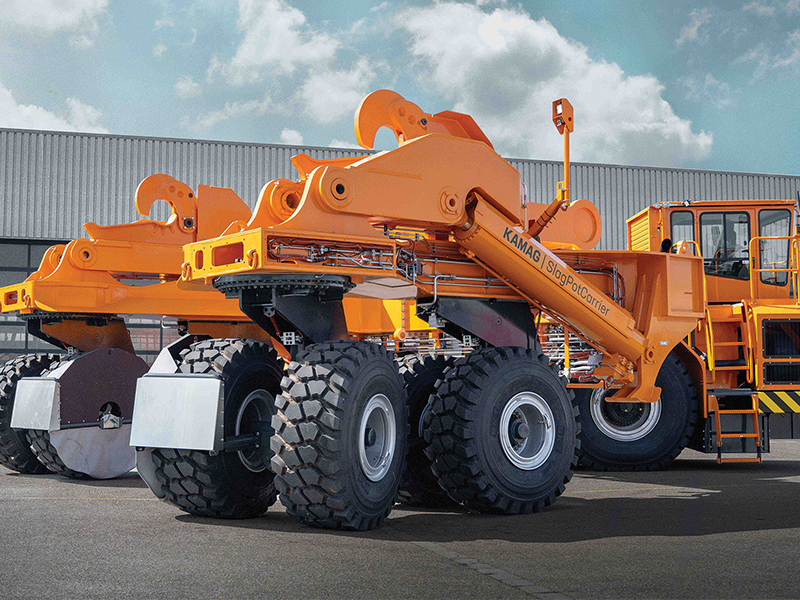
In December 2025, a state-of-the-art Indian steel mill took delivery of a KAMAG SPC 2803-170, one of the world's largest slag carriers with a 170-ton payload capacity. This facility produces stainless steel for industrial and infrastructure applications, as well as daily consumer goods, and operates 24/7 to meet global demand. The company already uses various TII KAMAG brand slag carriers and bases its fleet management strategy on proven technology and operational reliability.
When an additional vehicle was needed, the new carrier was required to be as robust, reliable, and easy to use as existing models, while also offering a higher payload capacity. The challenge wasn't limited to tonnage. The vehicle had to navigate the plant's confined spaces, pass under low-ceiling warehouse doors and pipe bridges, and be ready for uninterrupted operation in one of the world's most demanding industrial environments.
Minimizing loading and unloading times was also critical. Any delay can damage equipment and disrupt the production schedule by causing the slag in the ladle to cool. Therefore, the management team evaluated numerous solutions and ultimately opted for a configuration based on experience gained from many steel plants worldwide. This decision resulted in a solution that increased efficiency, reduced downtime, and significantly improved fleet management.
Robust Technological Solution
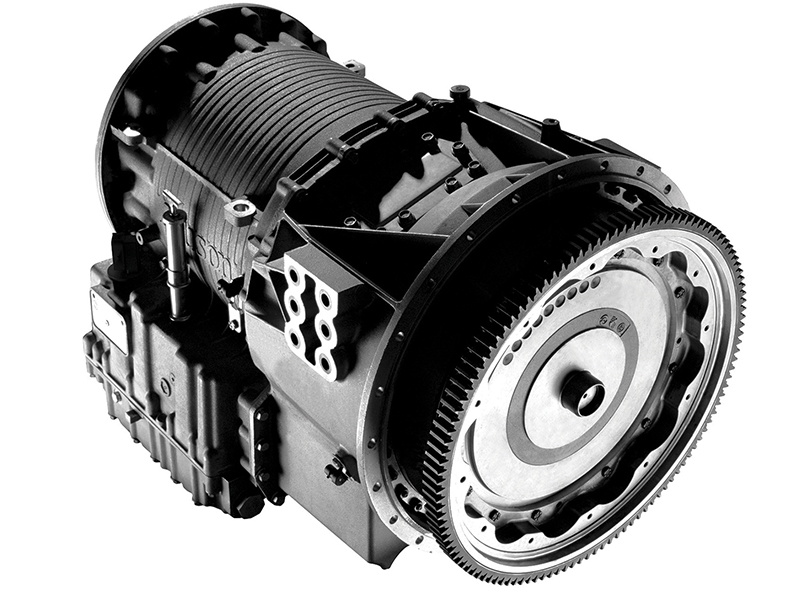
The KAMAG SPC 2803-170 was delivered equipped with an Allison 4000SP fully automatic transmission, specifically developed for demanding heavy-duty applications.
At the heart of this configuration is a Caterpillar C15 diesel engine producing 403 kW (540 hp) at 2,100 rpm. This engine, paired with the robust Allison 4000 SP transmission and DGS VG2600 transfer case, creates a compact drivetrain that provides excellent traction at vehicle starts and delivers seamless, smooth power transfer.

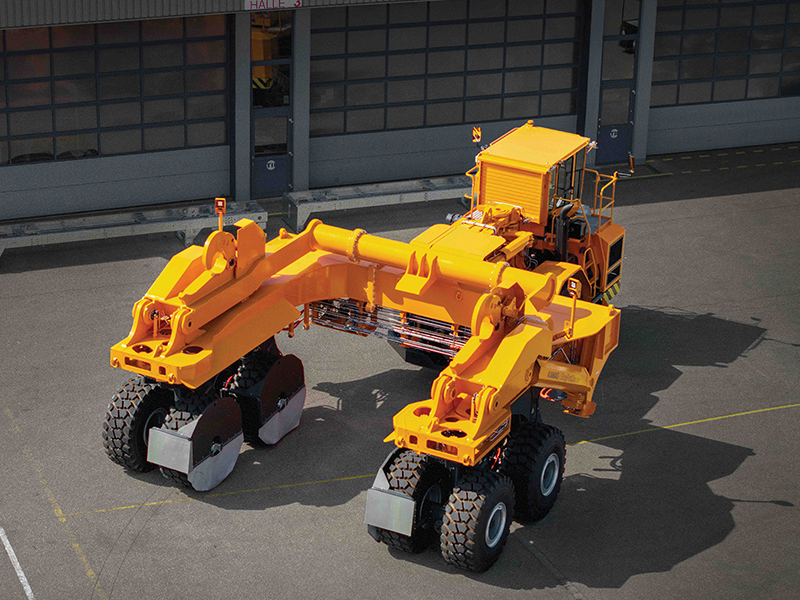
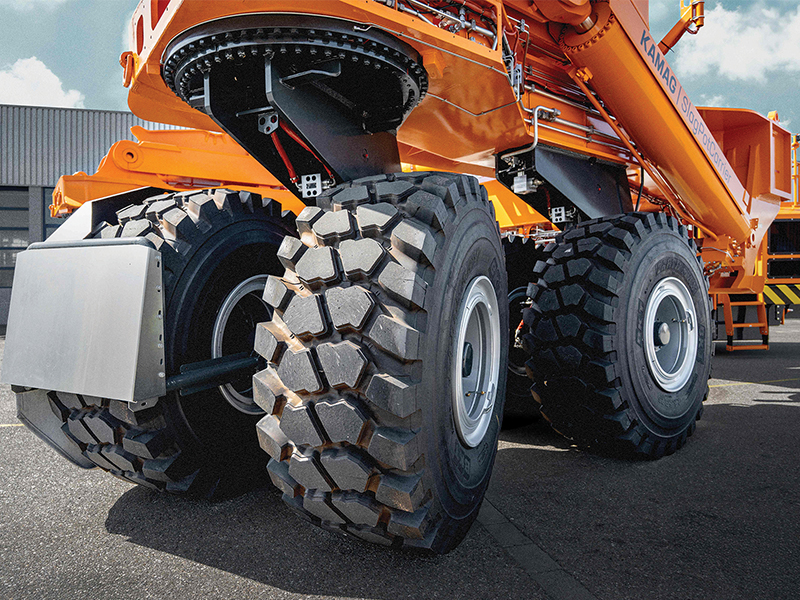
Despite its enormous size – 12.35 meters long, 7.62 meters wide, 5.25 meters high, and 96.5 tons unladen (266.5 tons fully loaded) – the vehicle proves to be extremely agile and maneuverable. The U-chassis design reduces loading and unloading times, while the low loading height allows for the selection of the shortest route when passing under depot doors or pipe bridges. The maximum vehicle speed is limited to 8 km/h when loaded and 35 km/h when unladen. Allison's acceleration control and Continuous Power Technology™ ensure the safe transport of slag within the ladle, even during challenging maneuvers. Automatic gear selection relieves the driver of the burden of manual gear changes, allowing them to fully focus on the delicate balance between speed and stability. Since the slag needs to be rapidly transported to cooling pools before cooling within the ladle, controlled and stable transport is critical, especially during the delicate unloading process.
The Proven Advantages of Allison Fully Automatic Transmissions
The impact of fully automatic transmissions on operations exceeds expectations. Michael Birzele, Team Leader of KAMAG's Industrial and Special Projects Business Unit, describes the long-term success of this configuration as follows: “Our SPC models have been equipped with Allison transmissions since 2013 and are actively used worldwide. This structure offers the most compact powertrain system. It provides high torque, unparalleled power, and excellent traction. Furthermore, fully automatic transmissions require minimal maintenance due to their superior durability.”
The transmission's intelligent shifting strategy instantly adjusts shift points according to the current load, providing an optimal balance between performance and fuel consumption. When the slag pot is empty, the transmission shifts at lower engine speeds, preventing unnecessary fuel consumption. Under full load conditions, higher engine speeds provide the necessary traction and power for safely transporting a 267-ton load within the plant.
The torque converter, replacing traditional clutch systems, reduces the number of wear parts, lowering maintenance costs. This translates to longer operating hours, less downtime, and higher overall productivity. This provides crucial advantages, especially for facilities operating 24/7.
