


Stuttgart, Germany – Technology and services supplier Bosch completed the challenging fiscal year 2025, marked by significant global economic pressures. According to preliminary closing figures¹, sales revenue reached €91 billion, slightly above the previous year (2024: €90.3 billion). Adjusted for currency effects, sales revenue increased by 4.2 percent. The operating EBITDA margin remained at 1.9 percent, below expectations (2024: 3.5 percent). The slower growth in 2025 was primarily driven by global economic weakness and challenging market conditions.
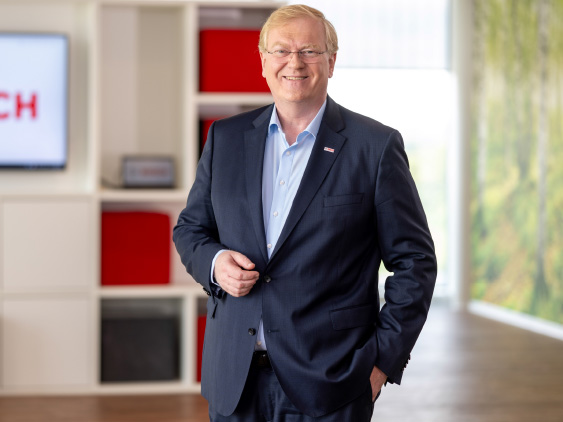
Bosch Group CEO Stefan Hartung commented on the preliminary closing figures: “The economic reality is reflected in our results. 2025 was a challenging and at times frustrating year for Bosch.” Hartung continued: “Despite the adverse conditions, we continue to work systematically on our growth strategy. This also requires us to increase our competitiveness. We are now defining our course for the future.” As part of its 2030 Strategy, Bosch plans to continue leveraging its global presence, strong brand, and technological expertise.
While Bosch expects competition to intensify in the current economic environment, it does not foresee a significant recovery in the markets in which it operates before 2027. In line with the company’s long-term goals, a 6-8% annual sales growth and a margin of at least 7% remain the strategic benchmark for sustainable growth; under current conditions, this target margin is expected to be reached no earlier than 2027.

Competitiveness: Closing the cost gap, strengthening investment capacity
As part of its 2030 Strategy, Bosch is focusing on transforming its cost structure and securing its investment capacity. The strategy supports the company’s goal of becoming one of the top three suppliers in key markets across the globe, while requiring competitive cost levels, targeted profit margins, and demand-driven capacity management. Hartung stated, “We are working hard on our material costs, using artificial intelligence more intensively to increase our productivity, and evaluating every investment more carefully than ever before.” “However, in the long term, to secure our competitiveness and investment capacity, we need to do much more to reduce our personnel costs and make our organization more efficient.”
The transition to electromobility and the extremely high price and competitive pressures in the global automotive sector have created a cost gap of approximately €2.5 billion annually compared to the target margin in the Mobility business alone, leading Bosch to announce the need for restructuring in approximately 13,000 positions last year. Hartung emphasized that these steps are necessary but responsible decisions aimed at preserving the company’s long-term competitiveness and investment capacity. He stated that Bosch aims to implement these unavoidable measures in close consultation with employee representatives and in a way that is as socially acceptable as possible, even if it initially leads to high costs for the company.

2030 Strategy: Innovations and acquisitions will create job opportunities
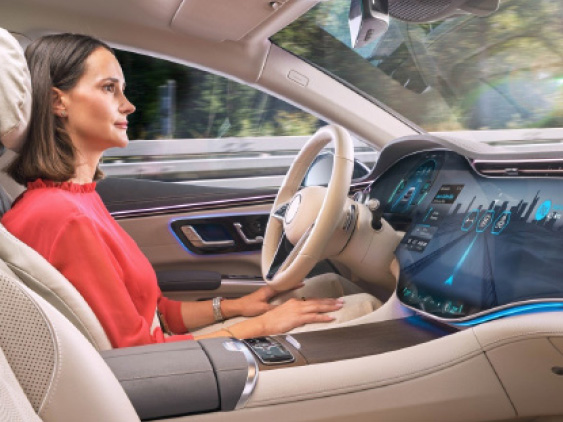
Despite the adverse conditions, Bosch sees significant growth opportunities for the revitalization of business in many market segments. Hartung stated, “We expect market momentum in critical areas such as software-driven mobility to be initially limited, but to accelerate significantly, particularly over the next decade.” Bosch has already secured €11 billion in orders for autonomous driving solutions, particularly in areas like intelligent driver assistance systems and sensor technology, by 2025.
The acquisition in HVAC (Heating, Ventilation, Air Conditioning) solutions is expected to nearly double Bosch Home Comfort’s sales revenue to €8 billion in the medium term. The business unit is already one of the world’s largest suppliers of heating, ventilation, and cooling solutions for residential and light commercial buildings. In the Power Tools business unit, time to market has been shortened by an average of two months, with plans to launch approximately 2,000 new products by 2027. The company also aims to invest a total of €2.5 billion in artificial intelligence by the end of 2027.
Technological distance jeopardizes Europe’s prosperity and competitiveness.
According to Bosch, while Europe has strong potential for regional competitiveness, realizing this potential depends on overcoming the skepticism of society and policymakers towards technology. According to the latest Bosch Tech Compass survey, in Germany less than two-thirds believe in the positive effects of technological progress, and this figure is even lower in France. Hartung says, “This is quite worrying. A country, a society, a global race…” Competition can only survive if there is sufficient will for technological progress.” Bosch emphasized the need for bolder steps in areas such as hydrogen and artificial intelligence, and is actively involved in this transformation with over 2,000 patent applications in the field of artificial intelligence alone since 2018.
Developments in 2025: Global economy slows sector sales
Challenging global conditions in Bosch’s various focus markets directly impacted sales performance across business lines in 2025. In the Mobility business area, sales revenue reached €56 billion, representing a nominal increase of 0.3% year-on-year and a 3.1% increase when adjusted for currency effects. The Industrial Technologies business area generated €6.5 billion in sales revenue, with a growth rate of 3.2% when adjusted for currency effects. Sales in the Consumer Goods business area decreased by 1.9% nominally to €19.9 billion, but increased by 4% when adjusted for currency effects. The Energy and Building Technologies business area achieved sales revenue of €8.4 billion, representing a nominal growth of 12.3% and a 15.3% growth when adjusted for currency effects, mirroring the growth of other business areas. The company diverged from its areas of expertise.
Regionally, sales revenue in Europe decreased by 0.6% nominally to €44.2 billion, but increased by 1.5% when adjusted for currency effects. Sales in the Americas increased by 9.2% when adjusted for currency effects to €18.5 billion, while in Asia Pacific, sales increased by 5.6% when adjusted for currency effects to €28.3 billion.
Markus Forschner, Member of the Board of Management and Chief Financial Officer of the Bosch Group, assessed the outlook as follows: “We clearly felt the effects of the weak global economic environment. Nevertheless, the steps we have taken aim to strengthen our cost and competitive position. We will gradually see the positive impact of these improvements on margins; we expect to reach our target margin of 7% no earlier than 2027.”
Bosch, which finished 2025 with 412,400 employees, saw its global workforce decrease by approximately 5,400 people (1%) compared to the previous year. The largest decrease occurred in Germany, where the number fell by approximately 6,500 people (about 5%) to 123,100 employees. For 2026, Bosch expects the global economy to grow by 2.3%, while anticipating continued competition and price pressures. The company positions the transformation steps it is undertaking as part of its 2030 Strategy as a fundamental element of long-term growth and resilience.