

Software and Hardware Harmony Accelerates Transformation
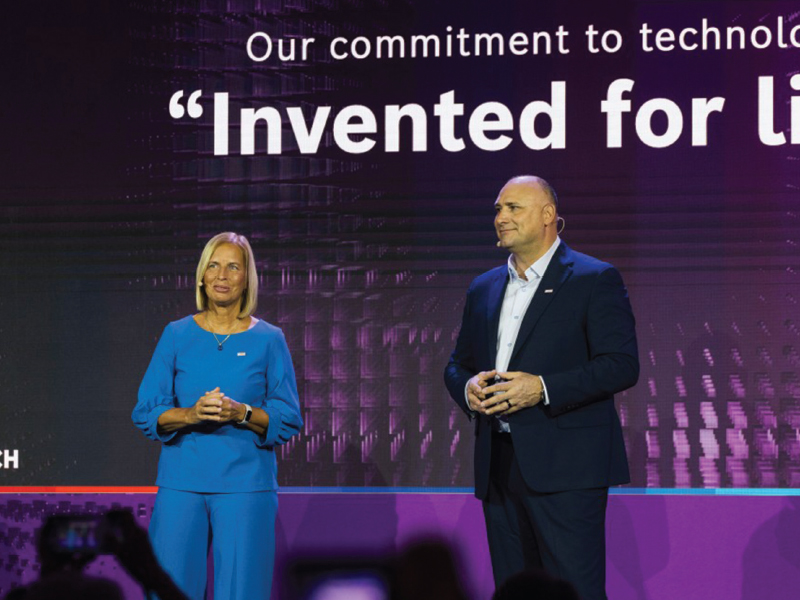
* Tanja Rückert: “Our expertise allows us to bridge the gap between the physical and digital worlds.”
* Bosch expects software and services revenue to exceed €6 billion; approximately two-thirds of this will come from the Mobility business unit.
* Smart and personalized mobility: Bosch software adds new features to vehicles even after they leave the dealership.
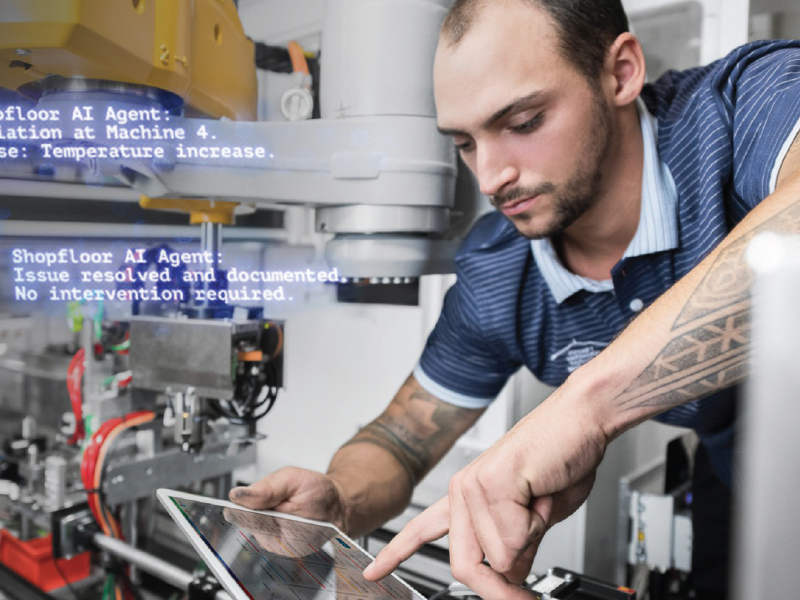
* Bosch, together with Microsoft and with agent-based artificial intelligence support, is preparing factories for the future. * Bosch announced a comprehensive collaboration with Kodiak AI to develop redundant platforms for driverless trucks. * Bosch Tech Compass Turkey results: “We are ready for the age of artificial intelligence.”
Las Vegas, Nevada / USA – In a world where digitalization is accelerating, software stands out as the invisible engine of progress. Software shapes the way we communicate, the way we work, the devices we use in daily life, and production processes. However, software only reaches its true potential when seamlessly integrated with the physical world of hardware. At CES® 2026, Bosch is showcasing how software and hardware come together to make a smarter future possible. “Thanks to our years of expertise in hardware and software, we are able to bridge the gap between the physical and digital worlds. By integrating hardware and software, we develop smart products and solutions that reflect a human-centered approach – ‘Technology for Life’,” said Tanja Rückert, Member of the Bosch Board of Management, at the Las Vegas trade show.
Strong Growth Target in Software and Services
Bosch aims to generate over €6 billion in revenue from software and services by the beginning of the next decade. A significant portion of this revenue is expected to come from AI-based solutions. Approximately two-thirds of this revenue is projected to come from the Mobility business unit. The company plans to double its revenue from software, sensor technologies, high-performance computing, and network components to over €10 billion by the mid-2030s. Bosch continues its pioneering role in the application and development of artificial intelligence. The technology company will invest over €2.5 billion in this area by the end of 2027.
AI Innovations in Cockpit Experience
Artificial intelligence plays a key role in the vehicles of the future. Bosch is already using AI solutions to improve driving safety and comfort. At CES® 2026, Bosch is introducing its new AI-based cockpit solution.
Developed as an all-in-one system, this cockpit allows for a high degree of personalization of the in-vehicle experience. Equipped with a large language model, the system can communicate with the user in a way that gives the feeling of talking to a real person. The visual language model can perceive and interpret the environment inside and outside the vehicle. This allows the system to, for example, automatically search for parking spaces when the destination is reached or generate meeting minutes during online meetings.

Software-Defined Driving with By-Wire Systems
Bosch is also among the leading providers of by-wire systems, a key technology for automated and software-defined driving. These systems replace mechanical connections for braking and steering with electrical signal lines, offering entirely new possibilities in terms of design, safety, and software control. Bosch expects to achieve cumulative sales revenue of over €7 billion by 2032 with brake-by-wire and steer-by-wire. The market dynamics for this key technology will continue to accelerate in the 2030s.
Reducing Motion-Related Discomfort with Intelligent Software
Bosch's Vehicle Motion Management software centrally controls the brakes, steering, drivetrain, and chassis, enabling vehicle movement across all six degrees of freedom. This allows for better coordination and more efficient use of individual actuators.
In the future, these systems will also be adjustable to the driver's individual needs. The software aims to prevent motion-related discomfort by significantly reducing swaying in curves or back-and-forth movement in stop-and-go traffic. This is seen as a significant step towards autonomous driving.
Radar Gen 7 Premium Debuts at CES
Bosch is introducing its Radar Gen 7 Premium solution, which combines sensor technology and artificial intelligence, for the world premiere at CES. The new radar sensor takes driving assistance functions, such as highway pilot, to the next level. Thanks to its special antenna configuration, the sensor offers maximum angular accuracy and a very long range, detecting even very small objects such as tracks or vehicle tires at distances exceeding 200 meters. This enables accurate detection of lost loads or other road users in complex traffic conditions, allowing for appropriate driving maneuvers.
eBike Safety Takes a Step Further
Bosch's hardware and software expertise is also making eBikes safer. With a new feature added to the eBike Flow app, users can mark their bikes or batteries as stolen.
In this case, second-hand buyers, authorized service centers, or security agencies receive alerts when they try to connect via the eBike Flow app. This significantly complicates the resale of stolen eBikes.
The unsung heroes of digitalization: MEMS sensors
From automotive to industry, from home technologies to robotics applications, many innovations are based on small but highly advanced sensors. Bosch is introducing its new BMI5 AI MEMS sensor platform at CES. All sensors developed on this platform stand out with their high sensitivity, durability, and energy efficiency. Thanks to integrated artificial intelligence functions, they can detect movements, positions, and contexts. The new sensors provide natural 3D interaction by tracking head movements without delay in virtual and augmented reality applications. They also help robots perceive their environment and movements with high accuracy. For example, they enable humanoid robots to find the right path even when camera vision is limited.

Bosch and Microsoft Announce Expanding “Manufacturing Co-Intelligence®” Collaboration
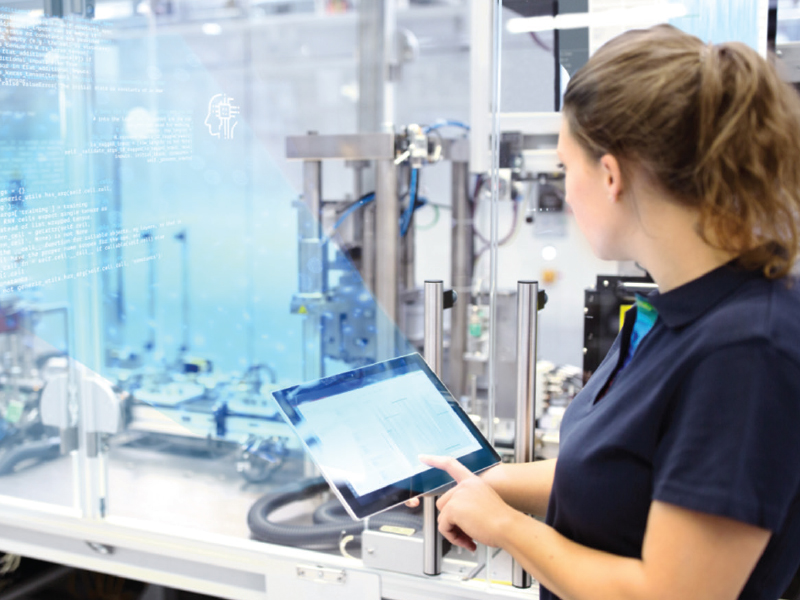
Bosch announced at CES® 2026 that it is expanding its collaboration with Microsoft. The two companies aim to revolutionize manufacturing by developing a “Manufacturing Co-Intelligence®” solution with agent-based artificial intelligence. The two companies will sign a Memorandum of Understanding (MoU) in Las Vegas. Agent-based AI can analyze very large datasets, make largely autonomous decisions, and optimize production, maintenance, and supply chain processes. Tanja Rückert stated, “This technology makes factory processes much smarter.” The collaboration combines Bosch’s deep expertise in manufacturing and industrial software with Microsoft’s strong IT infrastructure and software expertise. The goal is to make existing production processes scalable with AI-powered solutions, thus increasing factory efficiency and reducing the workload for employees.
A Pocket-Sized Revolution Against Counterfeiting
Another innovation introduced by Bosch at CES is the groundbreaking Origify solution for combating counterfeit products. Origify is positioned as an intelligent software ecosystem that gives products a digital DNA. Instead of additional labels, chips, or codes, the system analyzes the unique and uncopyable physical characteristics of the product's surface, assigning a tamper-resistant digital identity to the product. Thanks to the Detector application, using live video streaming, it can determine whether a product is genuine or counterfeit within seconds.
Bosch Tech Compass: Artificial Intelligence is the Driving Force of the Future
The Bosch Tech Compass study, conducted with more than 11,000 people in seven countries, reveals that artificial intelligence is seen as the most effective and positive technology in the coming years. 70% of participants consider AI an indispensable element of the future.
The study shows that despite the increasing optimism towards artificial intelligence, concerns about its societal impact also persist. 57% of participants highlight the need for a "pause" to better understand the impact of technological advancements.
Bosch Tech Compass Turkey Results: "We are ready for the age of artificial intelligence"
According to the initial results of the Bosch Tech Compass survey, which included Turkey for the first time, three-quarters of participants feel ready to face the age of artificial intelligence. The results reveal that Turkey approaches technological and innovative developments with an open and hopeful perspective. Participants in Turkey have a higher-than-average level of confidence than the global average that technological advancements will make the world a better place and that artificial intelligence will be a positive force for society.
The Bosch Tech Compass survey, conducted with more than 11,000 people in seven countries, reveals that artificial intelligence is seen as the most effective and positive technology in the coming years. Despite the increasing optimism regarding artificial intelligence, the research shows that concerns about its societal impacts persist. 57% of participants highlight the need for a "pause" to better understand the impact of technological advancements.